


Navratri fasting does not have to mean nine days of bland food. Some of the most satisfying dishes in Indian cooking are vrat ka khana, meals built around sabudana, buckwheat, potatoes, peanuts, and fresh spices. Simple ingredients, cooked with care, often taste better than everyday meals.
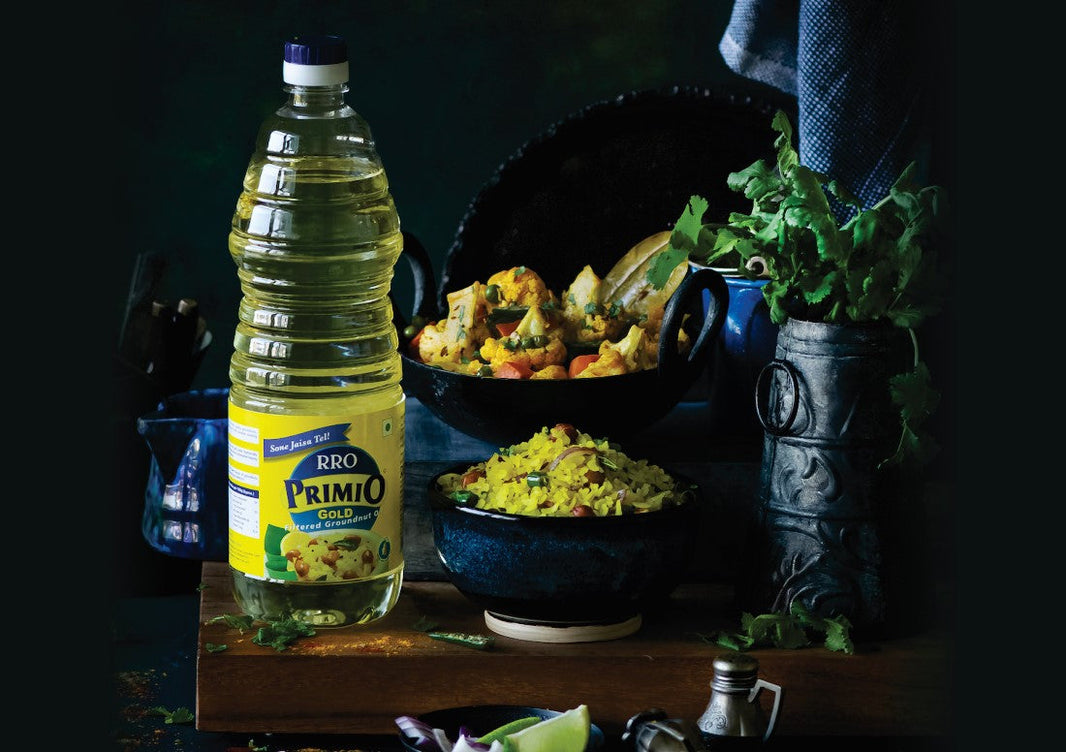
Groundnut oil has always been a trusted choice for Navratri cooking. It is considered pure and acceptable during fasting, carries a mild flavour that lets the food speak, and handles both the gentle stir of a sabudana khichdi and the hot oil of a kuttu ki puri equally well.
Here are four Navratri recipes that bring flavour and satisfaction to every fasting day.
Why Groundnut Oil Suits Navratri Cooking
Many families avoid certain oils and ingredients during Navratri. Groundnut oil is widely accepted across most fasting traditions. Primio Refined Groundnut Oil is zero cholesterol and trans-fat free, making it a practical daily choice through the nine-day fast. Filtered Groundnut Oil brings a slightly richer peanut warmth to dishes where you want the oil to contribute flavour.
For light sautéing and tadka, Cold-Pressed Groundnut Oil adds a gentle, earthy depth. For deep frying, refined or filtered groundnut oil handles the heat better.
Sabudana Khichdi
The most popular Navratri fasting recipe, and for good reason.
Ingredients (Serves 2 to 3)
- 1 cup sabudana (tapioca pearls), soaked for 4 to 6 hours and drained
- 1 medium potato, diced small
- A handful of roasted peanuts, lightly crushed
- 2 green chillies, chopped
- 1 teaspoon cumin seeds
- 2 tablespoons Filtered Groundnut Oil or ghee
- Sendha namak (rock salt) to taste
- Fresh coriander and lemon juice for finishing
Method
- Heat the oil in a wide pan.
- Add cumin seeds and let them splutter.
- Add green chillies and diced potato; cook until the potato is soft.
- Fold in the soaked sabudana and crushed peanuts.
- Stir gently on low heat for 5 to 7 minutes until the pearls turn translucent.
- Season with rock salt, finish with lemon juice and fresh coriander. Serve hot.
Kuttu Ki Puri
Crisp, golden buckwheat puris that pair perfectly with curd or any dry sabzi.
Ingredients (Makes 6 to 7 Puris)
- 1 cup kuttu ka atta (buckwheat flour)
- 2 tablespoons boiled mashed potato
- 1 teaspoon ghee or oil
- Sendha namak to taste
- Water as needed
- Primio Refined Groundnut Oil for deep frying
Method
- Mix the buckwheat flour, mashed potato, salt, and ghee.
- Add water gradually to form a soft dough.
- Divide into small balls and roll into thin circles using dry flour.
- Heat Primio Refined Groundnut Oil in a kadhai to a medium-high temperature.
- Fry the puris in batches until puffed and golden on both sides.
- Drain on a wire rack and serve hot with curd or aloo sabzi.
Aloo Jeera (Fasting Style)
A staple side dish that rounds out any Navratri thali.
Ingredients (Serves 2)
- 3 medium potatoes, boiled and cubed
- 1 teaspoon cumin seeds
- 2 green chillies, slit
- 2 tablespoons Cold-Pressed Groundnut Oil
- Sendha namak and black pepper to taste
- Fresh coriander for garnish
Method
- Heat the oil in a pan.
- Add cumin seeds; let them crackle.
- Add green chillies and cubed potatoes.
- Toss on medium heat for 4 to 5 minutes until the edges crisp lightly.
- Season with rock salt and pepper.
- Garnish with coriander.
- Pairs beautifully with kuttu ki puri or a bowl of curd.
Singhare ke Atte ka Halwa
A warm, comforting sweet to end a fasting day.
Ingredients (Serves 2)
- Half a cup singhare ka atta (water chestnut flour)
- 3 tablespoons ghee
- Half a cup sugar or jaggery
- 1 cup water
- A few strands of saffron, cardamom powder, and chopped almonds
Method
- Heat ghee in a heavy pan.
- Add the water chestnut flour and roast on low heat, stirring continuously, until it darkens slightly and smells nutty.
- In a separate vessel, dissolve sugar in warm water with saffron and cardamom.
- Pour the syrup slowly into the roasted flour, stirring constantly to avoid lumps.
- Cook until the halwa thickens and leaves the sides of the pan.
- Garnish with almonds and serve warm.
Tips for Better Navratri Cooking
- Soak sabudana generously; under-soaked pearls stay hard in the centre
- Use sendha namak (rock salt) instead of regular table salt
- Fry in small batches to maintain oil temperature and keep puris crisp
- Drain fried items on a wire rack, not paper towels
- The RRO Oil collection and Cold Pressed Oils range cover every fasting cooking need, from gentle sautéing to deep frying
Fasting, Without Compromise
Navratri is a time for devotion, reflection, and simplicity. The food you eat during these nine days should nourish without excess and satisfy without heaviness. Groundnut oil, with its mild flavour and clean profile, fits this spirit naturally.
When your fasting kitchen is stocked with oils from the RRO Oil range, trusted since 1992, every vrat ka khana starts on the right foundation.
Frequently Asked Questions
Is groundnut oil allowed during Navratri fasting?
Yes. Groundnut oil is widely accepted during Navratri fasting across most traditions. It is considered pure and is one of the most commonly used oils for vrat ka khana.
Which oil is best for frying kuttu ki puri during Navratri?
Refined groundnut oil is the most practical choice. Its high smoke point and neutral flavour give puris a clean, golden crispness without overpowering the buckwheat flavour.
Can I use cold-pressed groundnut oil for sabudana khichdi?
Yes. Sabudana khichdi involves light sautéing at moderate heat, which suits cold-pressed groundnut oil well. Its subtle nutty warmth adds a gentle depth to the dish.
What salt should I use during Navratri fasting?
Use sendha namak (rock salt) instead of regular table salt. Regular iodised salt is typically avoided during Navratri fasting.
Can I prepare these recipes ahead of time?
Sabudana khichdi is best eaten fresh. Kuttu ki puri can be made an hour or two ahead and reheated briefly in a hot oven. Aloo jeera holds well for a few hours at room temperature.
What other dishes can I make with groundnut oil during Navratri?
Sabudana vada, aloo tikki, makhana (fox nut) roast, and fruit chaat dressed with rock salt and lemon all work beautifully with groundnut oil.


