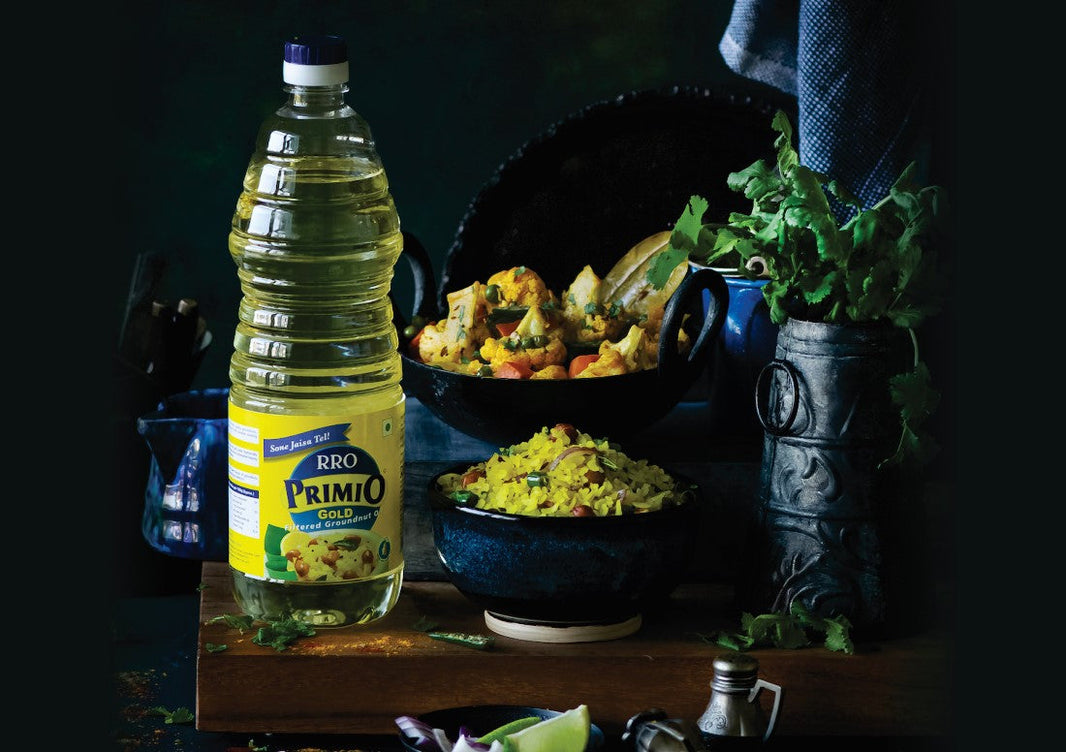


Punjabi style mixed vegetable pakora is a classic Indian tea-time snack: a crisp, golden fritter made from besan (gram flour) and mixed vegetables, deep fried until crunchy on the outside and tender within. Getting that perfect crunch without a heavy, greasy finish depends heavily on the oil used for frying. This recipe uses Primio Refined Groundnut Oil, a refined groundnut oil with a high smoking point and a naturally neutral taste, making it well suited to deep frying pakoras at home while letting the besan and spices come through clearly.
Recipe Snapshot
|
Preparation Time |
20 minutes |
|
Cooking Time |
20 minutes |
|
Cuisine |
Punjabi |
|
Spice Level |
Medium |
|
Serves |
3 to 4 people |
|
Cooking Oil |
Primio Refined Groundnut Oil |
Why Primio Refined Groundnut Oil Works for Pakoras
Deep frying pakoras means holding oil at a consistent medium-high temperature for several minutes at a stretch, so the oil needs to be stable under heat and gentle on flavour. Primio Refined Groundnut Oil is refined from first-quality groundnuts and carries a high content of Monounsaturated Fatty Acids (MUFA), which supports healthy cholesterol balance by helping lower LDL and raise HDL levels. It has a naturally high smoking point and stays stable during extended frying, and it can be reused safely for a second round of frying, making it a practical everyday choice for Indian snacks like pakoras.
Ingredients
Batter Base
-
Besan (gram flour) – 1 1/3 cup
-
Red chilli powder – 1/2 tsp
-
Turmeric powder – 1/2 tsp
-
Kasoori methi (dried fenugreek leaves) – 1 tbsp
-
Ajwain (carom seeds) – 1/4 tsp
-
Baking soda – 1/4 tsp (only for the fluffy version)
-
Salt – to taste
Roasted Whole Spices
-
Fennel seeds – 1 tsp
-
Cumin seeds – 1 tsp
-
Coriander seeds – 1 tsp
Vegetables
-
Onion (medium) – 1, about 85 to 100 g
-
Spinach – 1 cup, chopped
-
Cauliflower – 70 to 80 g, finely chopped
-
Potato (small) – 1, about 70 g
-
Bell pepper (medium) – 1/2, chopped
-
Green chilli – 1 tsp, finely chopped
-
Ginger – 2 tsp, finely chopped
-
Water – 120 to 150 ml (for the fluffy version)
-
Primio Refined Groundnut Oil – enough for deep frying
Step-by-Step Method
Step 1: Prepare the Vegetables and Spices
-
Wash the spinach leaves thoroughly, drain well, and pat dry with a kitchen towel so no extra moisture remains. Chop the leaves finely.
-
Finely chop the onion, ginger, green chilli, cauliflower, potato, and bell pepper, and keep all the vegetables ready in one bowl.
-
Dry roast the fennel, cumin, and coriander seeds for a minute until fragrant. Lightly crush them in a mortar and pestle to a coarse texture; do not grind them into a fine powder.
Step 2: Make the Pakora Mixture
-
In a wide bowl, combine all the chopped vegetables with salt, chilli powder, turmeric powder, kasoori methi, ajwain, and the crushed roasted spices. Mix well and set aside for about 10 minutes so the onion releases moisture.
-
Add the besan to the vegetable mixture and combine thoroughly. For a crispy, dry-style pakora, the mixture should hold together like a tight dough without adding extra water, since the onion's own moisture is usually enough.
-
If you prefer the softer, fluffier style of pakora (similar to a South Indian bajji), stir in the baking soda and add water gradually to form a thick batter that is not runny. Let this batter rest for 10 minutes so the soda can aerate the mixture.
-
Once the mixture or batter is ready, begin frying right away rather than letting it sit, since the texture can change quickly, especially once salt has drawn out moisture from the vegetables.
Step 3: Heat the Primio Refined Groundnut Oil
-
Pour Primio Refined Groundnut Oil into a kadai or deep pan, filling it enough for the pakoras to float freely, and heat it on a medium flame.
-
Test the oil by dropping in a small piece of the mixture. If it rises to the surface promptly and starts sizzling, the oil is at the right temperature to fry.
Step 4: Fry the Pakoras
-
For the crispy style, take a small handful of the mixture and scatter it loosely into the hot oil with your fingers, rather than shaping it. Fry 5 to 6 medium pakoras per batch.
-
For the fluffy style, drop small spoonfuls of the batter directly into the oil.
-
Fry on a medium flame, turning occasionally, until the pakoras are evenly golden brown on all sides. This typically takes 4 to 5 minutes per batch.
-
Avoid overcrowding the kadai; fry in small batches so each pakora has enough space to turn and cook evenly, and lift the finished pakoras out with a slotted spoon to drain excess Primio Refined Groundnut Oil.
Serving Suggestions
Serve the pakoras hot or warm with meethi chutney (sweet tamarind chutney), green mint-coriander chutney, or tomato ketchup for children. They pair especially well with masala chai on a rainy afternoon or as a starter before dinner.
Chef's Tips for the Best Pakoras
-
Keep the flame at medium throughout frying. Too high a flame browns the pakoras before the inside cooks; too low a flame lets them soak up excess oil.
-
Add water sparingly at first, since onions naturally release moisture as the mixture rests. Adjust with a little extra water only if the batter feels too dry.
-
Feel free to swap in white or purple cabbage, or add extra greens such as fenugreek leaves, to vary the mix while keeping the same base recipe.
-
Because Primio Refined Groundnut Oil is stable at high heat and safe to reuse, you can strain and store leftover frying oil for a second batch of snacks.


