


Two bowls sit on the breakfast table. One holds plain oats, cooked or soaked, simple and familiar. The other holds muesli, a mix of rolled oats, nuts, seeds, and dried fruit, ready to eat with milk or curd. Both are wholesome. Both are quick. But they are not the same thing, and the difference matters if you are making a deliberate choice about how your morning starts.
The muesli vs oats question is not about which is healthier in isolation. It is about which one fits your goals, your taste, and the pace of your mornings.
What Oats and Muesli Actually Are
Before comparing them, it helps to understand what each one is.
Oats
Oats are a single whole grain, processed into flakes (rolled oats), cut into pieces (steel-cut oats), or ground into a fine powder (instant oats). On their own, they are bland and require cooking or overnight soaking, plus additions like fruit, nuts, or sweetener, to become a satisfying meal.
Oats are rich in soluble fibre, particularly beta-glucan, which supports healthy digestion and helps you feel full for longer.
Muesli
Muesli is a ready-to-eat breakfast blend built on a base of rolled oats, combined with nuts, seeds, dried fruit, and sometimes grains like wheat flakes or rye. Harvest Munch Muesli follows this approach, bringing together multiple ingredients in a single bowl so you do not need to assemble breakfast from scratch.
The key advantage of muesli is variety. Where plain oats deliver one type of fibre, muesli brings a broader range of nutrients from its mixed ingredients, along with natural flavour and texture.
How Muesli and Oats Compare
| Quality | Plain Oats | Muesli |
|---|---|---|
| Base ingredient | Oats only | Oats plus nuts, seeds, dried fruit |
| Preparation | Needs cooking or overnight soaking | Ready to eat with milk or curd |
| Flavour | Bland on its own | Naturally varied and textured |
| Fibre | High (beta-glucan from oats) | High (oats plus fibre from seeds and fruit) |
| Protein | Moderate (from oats alone) | Higher when nuts and seeds are included |
| Convenience | Requires additions to be satisfying | Complete breakfast in one pour |
Neither is better in absolute terms. The right choice depends on what you need from your morning meal.
Muesli for Weight Loss: Does It Work?
The question 'is muesli good for weight loss' comes up often, and the answer is straightforward: yes, when chosen carefully and eaten in the right portions.
Muesli keeps you full for longer because it combines fibre from oats with protein and healthy fats from nuts and seeds. A bowl of Harvest Crunch Cereal (No Added Sugar) with cold milk or curd and a handful of fresh fruit makes a balanced, satisfying breakfast that holds you through the morning without the need for mid-morning snacking.
A few practical points for weight-conscious families:
- Choose muesli or granola with no added sugar or low sugar content
- Watch your portion size; a standard serving is about 40 to 50 grams
- Pair with low-fat milk, curd, or plant-based milk rather than full cream
- Add fresh fruit for natural sweetness instead of honey or sugar
Plain oats work equally well for weight management when prepared with minimal sugar and paired with protein-rich additions. The advantage muesli holds is convenience: the nuts, seeds, and fruit are already there.
Muesli for Protein: A More Complete Bowl
Plain oats provide moderate protein on their own, but a muesli or granola blend that includes almonds, peanuts, pumpkin seeds, or sunflower seeds delivers more protein per serving without any extra effort.
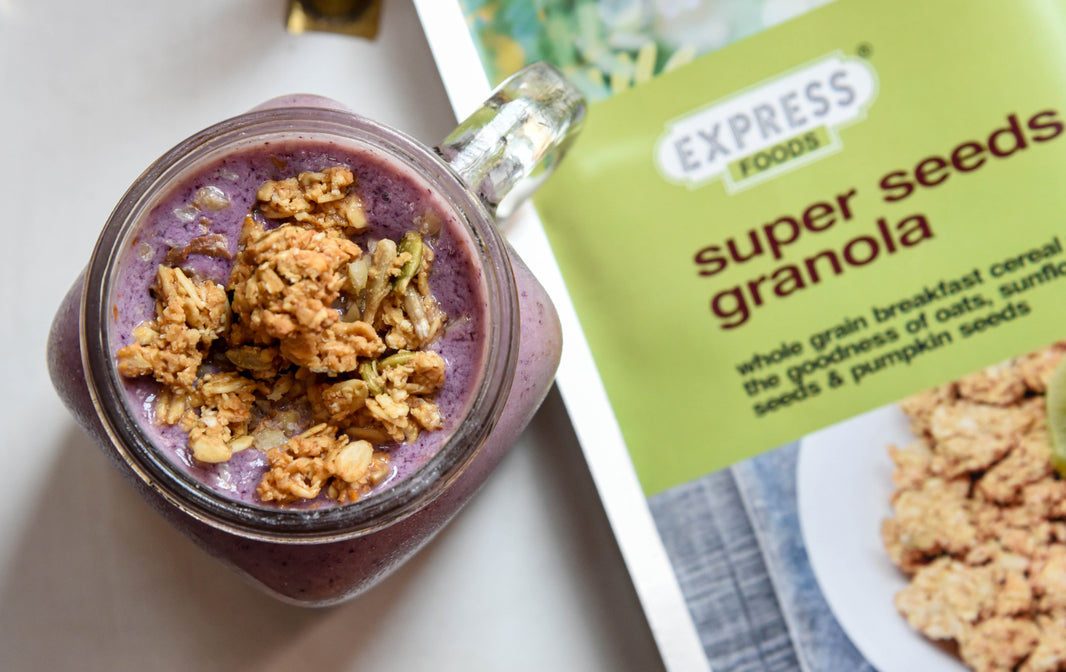
Super Seeds Granola and Peanut Butter Granola Cereal are designed with this in mind, combining oats with protein-rich ingredients for a high-protein muesli experience. For anyone looking to increase their protein intake at breakfast, a nut-and-seed-heavy granola is the most practical route.
Which Suits Your Morning Better
The right choice depends on how much time you have and what you enjoy.
- If you prefer cooking and customising your bowl from scratch, plain oats give you full control
- If you want a quick, ready-to-eat breakfast with built-in variety, muesli or granola saves time without sacrificing nutrition
- If you enjoy both, alternate between them through the week:
The ExpressFoods Cereal range covers multiple tastes:
Harvest Munch Muesli for a classic muesli
Oat Granola Cereal for a crunchier texture
Harvest Crunch Cereal (No Added Sugar) for families watching their sugar intake
Start With What You Will Actually Eat
The best breakfast is the one you eat consistently. A perfectly balanced bowl of oats that sits untouched because you ran out of time is less useful than a quick pour of muesli eaten with milk before you leave the house.
The ExpressFoods Cereal range, from a brand trusted since 1992, makes that consistency easy with wholesome options built for the pace of real mornings.
Frequently Asked Questions
Is muesli good for weight loss?
Yes, when chosen carefully. Muesli with no added sugar, eaten in a 40 to 50 gram serving with low-fat milk or curd, provides fibre and protein that keep you full through the morning and reduce the urge to snack.
Is muesli healthier than oats?
Neither is universally healthier. Plain oats are a single whole grain with strong fibre content. Muesli adds nuts, seeds, and dried fruit for a broader nutrient profile. The best choice depends on your goals and preferences.
How much muesli should I eat per day?
A standard serving is 40 to 50 grams, roughly half a cup. Pair it with milk, curd, or a plant-based alternative and fresh fruit for a balanced breakfast.
Can I eat muesli without cooking it?
Yes. Muesli is designed to be eaten without cooking. Pour milk or curd over it and eat immediately, or soak it overnight for a softer texture.
What is high-protein muesli?
High-protein muesli or granola includes ingredients like almonds, peanuts, pumpkin seeds, or chia seeds alongside the oat base. These additions raise the protein content of the bowl without requiring separate preparation.
Are oats and muesli both good for digestion?
Yes. Both are rich in dietary fibre, which supports healthy digestion. Muesli may offer additional fibre from dried fruit and seeds, giving the digestive system a broader range of fibre types.


